Key takeaways
- In mid August our prospect research read the copyright year out of each website's page code and turned an old one into an opening line: your footer says an old year, so the site reads as abandoned.
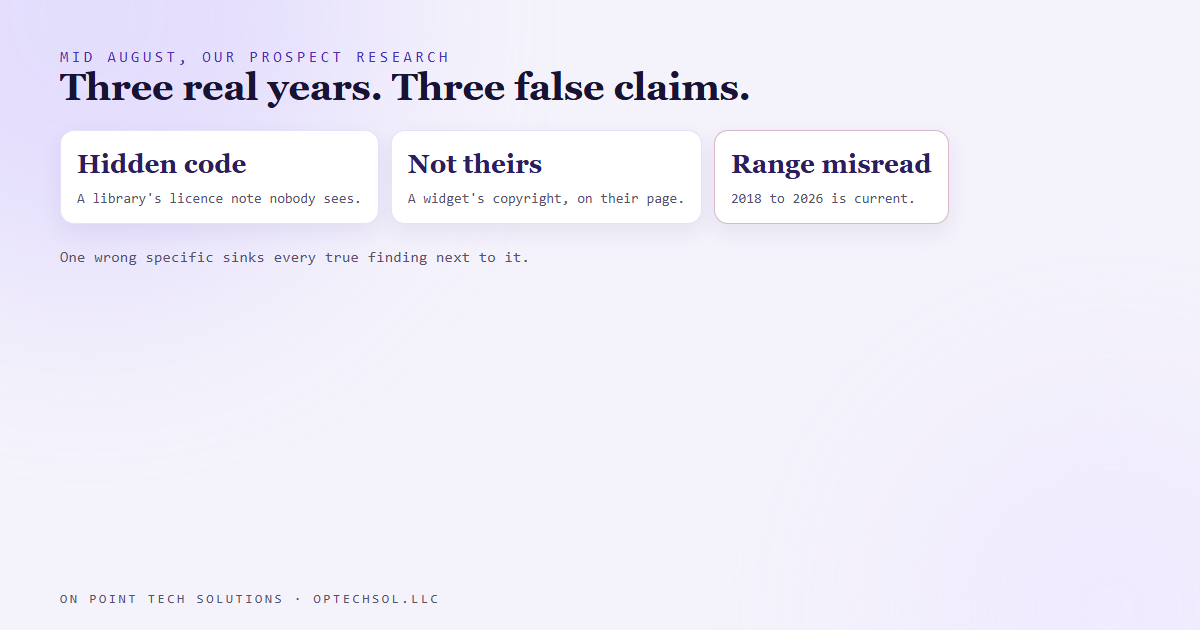
- It produced three kinds of false claim. The year was inside a design library's hidden licence note. The year belonged to another company's widget on the page. Or a range like 2018 to 2026 got read by its first number.
- At least one of those went out before the fix landed.
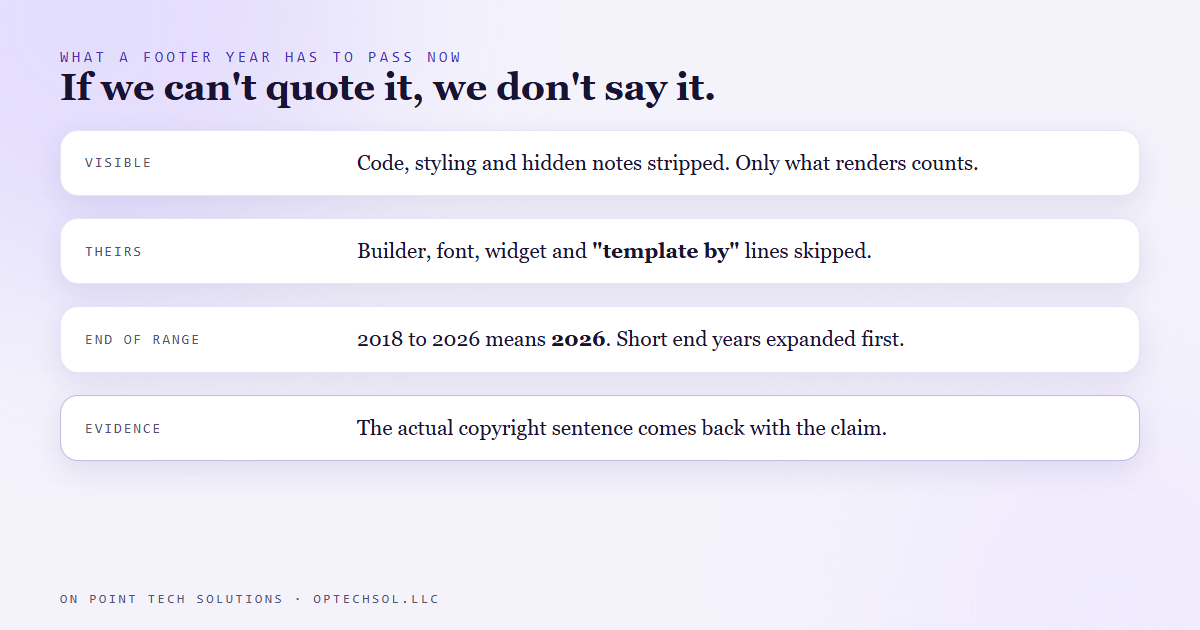
- A footer year is now claimable only if a visitor can actually see it, it belongs to the business, and it is the end of any range. The claim has to quote the real sentence.
- One wrong specific in a message to a stranger wipes out every true thing next to it.
Part of the marketing automation San Jose businesses hire us for is outreach that doesn't sound like a template. We do the same for ourselves. Before we reach out to a local business, a script visits their website and pulls a handful of plain facts. Is there a phone number you can tap? A contact form? A way to book? We open with something specific and true about their business, because that's the only kind of opener anyone reads.
In mid August one of those facts was wrong often enough to hurt.
A good idea for an opening line
The copyright year in a website's footer is a nice signal. If a site says 2017 at the bottom, there's a decent chance nobody has touched it in years. Customers notice that too. A stale footer quietly says the business might not be paying attention.
So the script looked for a copyright year and, when it found an old one, the outreach opened with it: your footer shows an old year, and here's why that matters.
The script was reading the page's code, though, not the page.
Three ways a true year told a false story
The first was a year nobody can see. Websites pull in shared design libraries to handle things like animations. Those libraries carry their own licence notes inside the code, years and all, and no visitor ever sees them. Two businesses got told their footer was stale because of a licence note buried in a library their site loads. Their actual footers were fine.
The second was a year that belonged to someone else. Some sites embed a tool from another company, like a mortgage calculator on a real estate agent's page. That tool brings its own copyright line with its own old years. It's the other company's stamp, sitting on the agent's page. It says nothing about the agent.
The third was a range read backwards. A footer that says 2018 to 2026 is a current footer. It means the business has been around since 2018 and updated it this year. The script took the first number. So a well kept site got called seven years stale and abandoned, and that message went out before the fix landed.
Every one of those years was really in the code. The script wasn't making anything up. It was reading the wrong thing and drawing a confident conclusion from it.
Why one wrong fact costs so much
Opening with something specific is how a message from a stranger earns a second line. It also means the first thing they check is whether you're right.
When a business owner looks at their own footer and sees the current year, the rest of the message is done. Every true finding we had about their site, the missing booking link or the phone number you can't tap, goes in the trash with the wrong one. And there's no taking back a sent email.
What a year has to pass now
The research script still reads footer years, because a really stale footer is worth knowing about. But a year has to clear three checks before it can be used.
First, it has to be visible. The script strips out everything a visitor can't see, the code, the styling, the hidden notes, and only reads what's left.
Second, it has to belong to the business. Any copyright line that names a website builder, a font, a widget company or a template maker gets skipped. If a line says "template by" or "powered by," everything after that is cut before any year is read.
Third, a range resolves to its end. 2018 to 2026 means 2026. We later found footers that shorten the end year, like 2000 to 26, so those get expanded first.
And the script now hands back the actual copyright sentence it found. No claim about a footer gets written without quoting it. If we can't point at the words, we don't say it.
What this means for marketing automation San Jose businesses
If you do any outreach at all, to past customers, to referral partners, to businesses you want as clients, the same thing applies. Personal beats generic only when the personal part is right. "I saw your new location on Main Street" lands. Getting the street wrong lands too, just the other way.
And if you're using AI or software to personalize messages at scale, it'll sometimes be wrong in ways that sound completely sure of themselves.
Three things worth doing this week:
- Look at your own website footer on your phone. If it shows an old year, fix it. Prospects and customers do read it.
- Before any personalized message goes out, check the one specific claim against what the other person can see. Not what a tool says it found.
- If a tool writes your outreach, ask it to show its source for every specific claim. If it can't, cut the claim.
The marketing automation San Jose owners actually benefit from saves time without putting words in their mouth they'd never say. A fact you can't point to doesn't belong in your outreach.
Want this built for you
We build outreach and follow up systems that check their facts before they speak for you, and you own every piece. Start at optechsol.llc.