Key takeaways
- Cloning a CRM setup as a template is the standard agency move, and almost nobody checks what the clone actually contains.
- We measured it: restored one into a throwaway account and compared it against the original, field by field.
- Good news first. Automations arrive switched off, which means a fresh account cannot start messaging real people on day one.
- The trap is the placeholders. Their names survive, their contents do not, so every merge field still resolves and resolves to nothing.
- The second trap was our own measurement reading zero when the real answer was hundreds.
If you set up CRM accounts for clients, you build a template once and clone it. Pipelines, custom fields, automations, phone agents, the whole shape of the thing, packaged up and dropped into a new account in one step.
Everyone does this. Very few people check what survived the trip. The assumption is that a clone is a clone.
We had a reason to actually find out, so we restored one into a throwaway account and compared it against the source piece by piece.
What came through
Most of it, and more than we expected. Custom objects all arrived. Custom fields arrived complete, all 202 of them, and they arrived still filed into their folders rather than dumped in one pile. Pipelines came through, so did the AI phone agent, and so did all 28 automations.
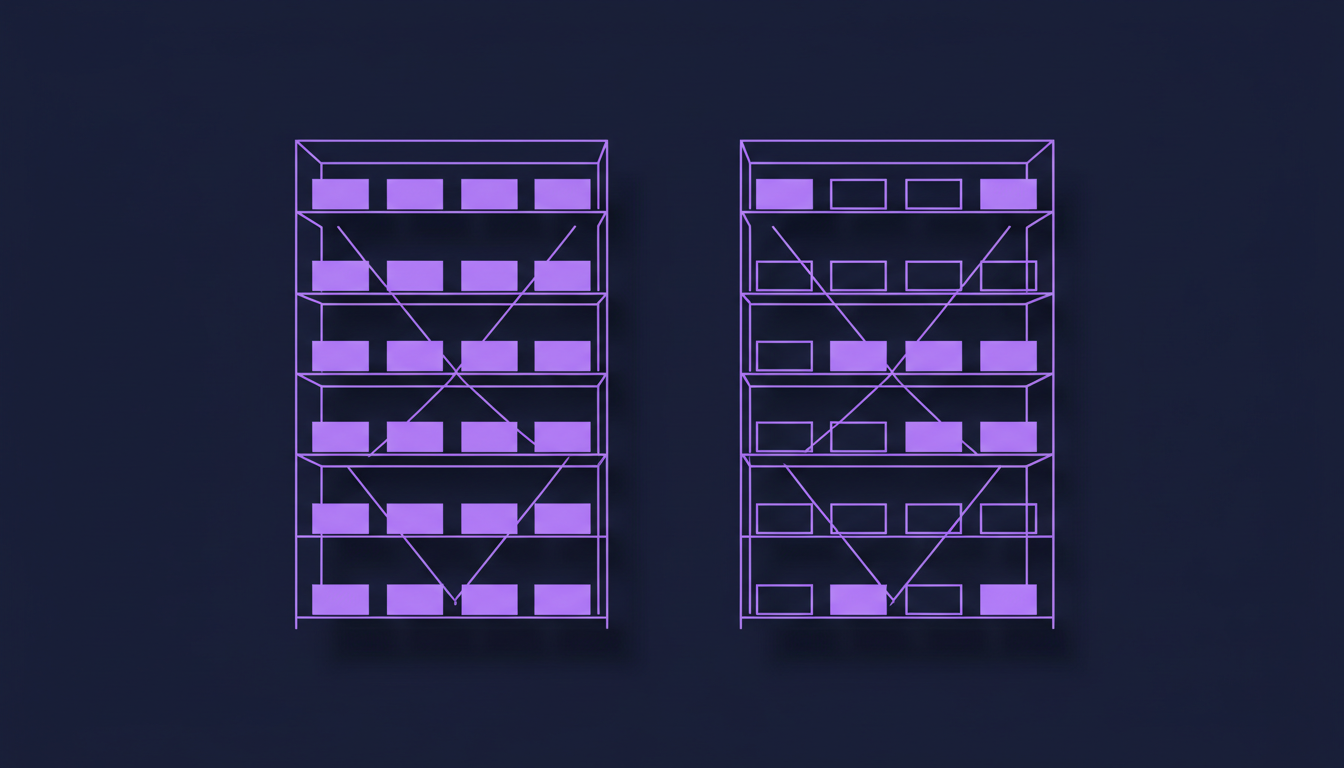
That last one carried the answer we most wanted, and it is the reason this was worth measuring rather than assuming.
The automations arrive switched off
Every automation restored as a draft, not as a live one.
Think about what the other answer would have meant. You spin up a brand new account for a client, and the moment it exists it starts running welcome sequences, follow up texts and reminder calls against whatever contacts are in there. On day one, before anyone has reviewed a single message.
That was the genuinely dangerous unknown, and it is the one thing nobody could tell us for certain. Now we know, because we looked, and the answer is the safe one. But we would not have shipped a client account on a guess.
The trap: placeholders arrive empty
Here is the one that bites.
A CRM template is full of placeholders. The business name, the phone number, the booking link, all written once and dropped into dozens of emails and texts so you fill them in one place.
Those placeholders travel. All 45 of them arrived. Not one of them arrived with anything in it.

So every message in the account still has a valid placeholder in it, and every one of them now resolves to nothing at all. The welcome email goes out with a blank space where the business name should be. Nothing errors. Nothing is flagged. It just quietly reads wrong to the customer.
That single finding is why filling those in is a mandatory step on every account we hand over, not a nice to have someone gets to later. A clone is not finished when the restore finishes.
And one thing that does not travel at all
The custom sidebar menu did not come across. Zero of them.
The reason is structural rather than a bug. That menu belongs to the agency level, and a clone only carries one account. Anything that lives above the account does not come with it, so it has to be installed per client afterwards.
Which gives a clean rule: after every restore, fill in the placeholders and re-add the menu. Two steps, every time, no exceptions.
The measurement nearly lied to us
This is the part I would want someone to tell me.
A brand new account has no credentials of its own yet, and the agency level credentials only answer agency level questions. So the first pass at checking the new account got a refusal on almost every question we asked.
A refusal reads exactly like an empty answer. The report would have said nothing travelled, when in fact everything had. We would have gone and rebuilt an account that was already correct.
It got sharper than that. One query came back reporting 120 fields and no folders at all, on an account that visibly has 202 fields in 11 folders. A required parameter was missing, so the system answered a narrower question than the one we asked, and answered that one accurately. We had a correct number for a question nobody meant to ask.
The habit worth stealing: when a measurement returns zero, prove your measurement can find a non-zero. Point the same check at something you know is there. If it also reports zero, your instrument is broken, not the thing you are measuring.
What this means if you are handed a cloned account
Plenty of businesses around the Bay Area get set up on a template built by someone else. If you work with any GHL consultant Bay Area agency, the account you were given probably started as a clone of something.
Four things worth checking in your first week:
- Send yourself the welcome email. Actually trigger it. Blank spaces where your business name should be is the single most common symptom.
- Check which automations are switched on. Drafts are safe, live ones are sending. Know which is which before you import a contact list.
- Look for anything missing from the menu. Account level things travel, agency level things do not.
- Ask what the handover checklist was. If there isn't one, the answers to the three above are probably unknown.
None of this means templates are bad. We use them because they save days of work and they are more consistent than building from scratch. It means a restore is the start of the setup, not the end of it.
If you want a CRM handed over with that checklist already done, that is how we work. Want to build this yourself? Join the On Point Tech Academy. It's free, and we build live every Tuesday and Thursday.
The On Point Tech Academy costs nothing and never asks for a card. We build live every Tuesday and Thursday, 12:30 to 1:30 PT.
Join the Academy free ← Back to all Field Notes